
Is Your Rifle Ready for Hunting Season? 10 Things to Check Before Opening Day
Opening day is getting closer. Is your rifle ready?
Preparing for hunting season involves more than checking your license and packing your gear. Your rifle should be clean, properly maintained, inspected and sighted in before you head into the field.
Whether your hunting rifle has been sitting in the safe since last season or you've already been spending time at the range, a preseason inspection can help identify potential problems before they become problems in the field.
Use this 10-point hunting rifle preparation checklist to make sure your firearm, optics and essential gear are ready for opening day.

1. Clean Your Rifle Before Hunting Season
One of the most important steps in preparing a rifle for hunting season is giving it a thorough cleaning.
A rifle that has been stored for months can accumulate dust, fouling and residue. Previous range sessions may have also left carbon and copper fouling in the bore.
Before cleaning, always follow the firearm manufacturer's safety and disassembly instructions.
When cleaning the bore, Otis Technology recommends cleanin from Breech-to-Muzzle®. This method allows you to clean in the same direction a bullet travels through the barrel while helping keep fouling and debris from being pushed back toward the action.
For a basic bore cleaning: [Otis Cleaning Instructions and Videos]
-
Apply the appropriate cleaning solvent to a patch.
-
Run the patch through the bore from breech to muzzle.
-
Follow with the appropriate bore brush. [How to Choose the Correct Bore Brush]
-
Finish with a clean, dry patch.
-
Repeat as necessary until the bore is properly cleaned.
- Run a final lubricating patch through the bore
Why clean your rifle before hunting season? A clean firearm allows you to start the season with a known baseline and gives you an opportunity to identify potential problems before you're in the field.
2. Inspect the Bore for Obstructions and Damage
Before and after every hunt, inspect the bore.
Make sure it is free of obstructions, excessive fouling and other debris. This is particularly important if your rifle has been stored for an extended period or has been exposed to moisture.
Never fire a firearm with an obstructed bore. If you discover an obstruction that cannot be safely removed, consult a qualified gunsmith or the firearm manufacturer.
A bore inspection should be part of your routine before heading to the range and before heading into the field. [How to
3. Inspect and Lubricate the Action
Cleaning the bore is only part of firearm maintenance.
Inspect the action and other accessible components for dirt, fouling, debris or signs of corrosion. Clean and lubricate the firearm according to the manufacturer's recommendations.
Avoid excessive lubrication. Too much lubricant can attract dirt, dust and other debris, particularly when you're hunting in outdoor environments.
Clean where cleaning is needed and lubricate where lubrication is recommended.
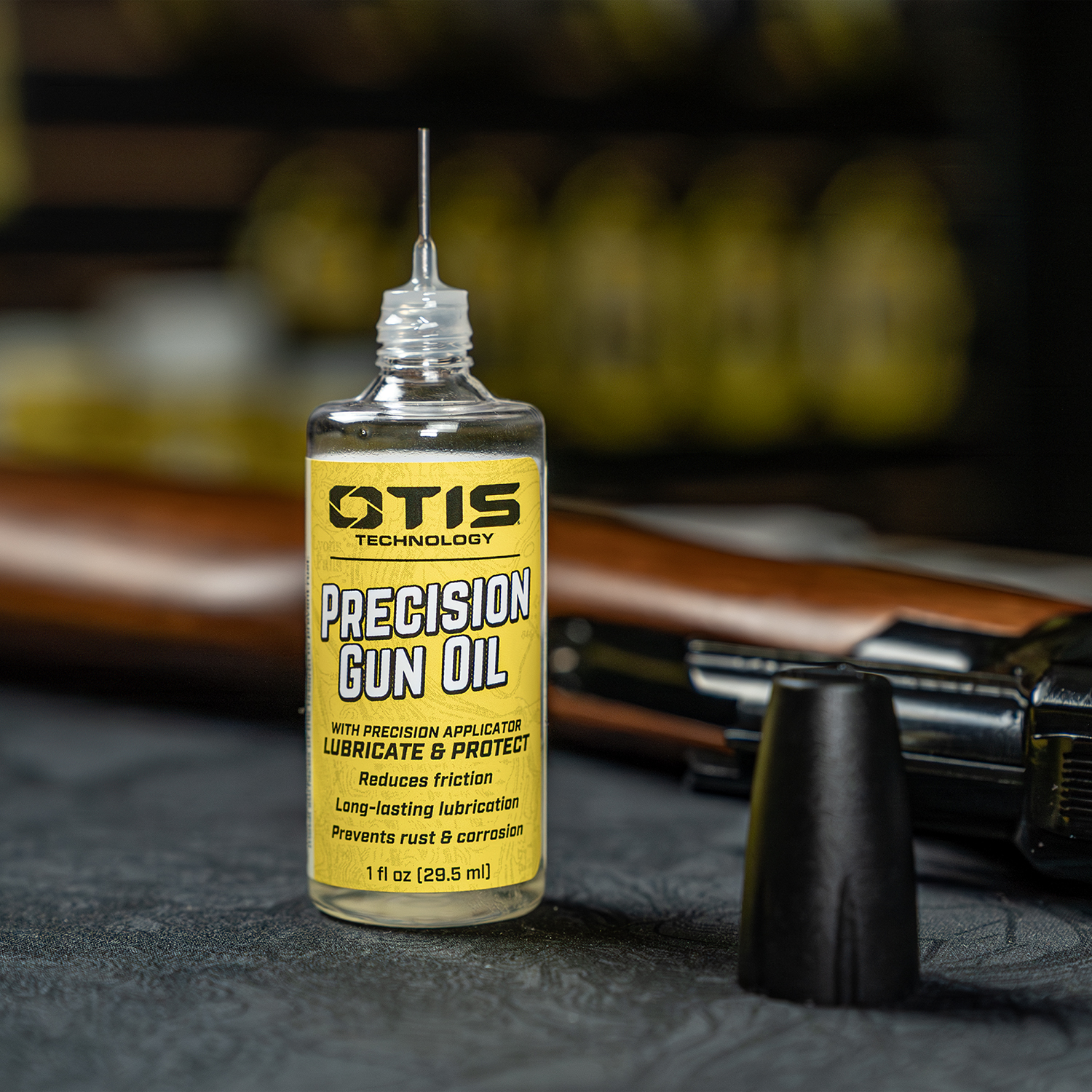
Recommended products for lubrication: Shooter's Choice FP-10 Lubricant Elite CLP Aerosol for fast liberal application of CLP cleaner protectant and lubricant all-in-one, Shooter's Choice All Weather Synthetic Grease for areas you need lubrication to stay put and not migrate or disapate over time. Otis Technology Precision Gun Oil 1 oz with needle applicator, is an odorless colorless formula that applies percisely and packs easily perfect for hunting applications.
4. Clean and Inspect Your Optics
Your rifle may be perfectly clean, but if your scope is dirty, your sight picture can still suffer and impact your hunt.
Before hunting season, inspect your scope lenses for:
-
Dust
-
Fingerprints
-
Dirt
-
Water spots
-
Smudges
-
Other debris
Always use products designed for cleaning optical lenses. Avoid household glass cleaners or abrasive materials that could damage optical surfaces.
The Otis Lens Cleaning Kit is designed for cleaning scopes, rangefinders, binoculars and other optical equipment. The kit includes a mohair lens brush, anti-fog lens cleaner, lens swabs, lens tissue and an Otis lens cleaning cloth.

Don't forget to inspect your scope mounts and rings as well. Follow the recommendations provided by your firearm and optic manufacturers for checking mounting hardware.
5. Confirm Your Rifle's Zero
Does a rifle need to be sighted in every hunting season?
It is a good practice to confirm your rifle's zero before hunting season, even if the rifle was properly zeroed at the end of the previous season.
The goal isn't to automatically adjust your scope every year. The goal is to verify that your rifle is still hitting where you expect it to hit.
Take your rifle to the range and use the ammunition you intend to hunt with. Confirm your zero under conditions that reasonably represent how you will use the rifle.
If the rifle is no longer producing the expected point of impact, investigate the cause before simply adjusting the scope. Check the mounting system, ammunition, rifle and optic before making changes.
A few rounds at the range can tell you far more than assuming your rifle is still zeroed because it was stored safely.
Don't wait until opening morning to discover that your point of impact has changed and his offers an opportunity to get some much-needed range time.
6. Inspect Your Hunting Ammunition
Your rifle isn't ready if your ammunition isn't ready.
Inspect cartridges for obvious signs of:
-
Corrosion
-
Damage
-
Contamination
-
Excessive wear
Make sure you're using the correct cartridge for your firearm and that the ammunition matches the caliber and cartridge designation specified by the firearm manufacturer.
If ammunition looks questionable, don't use it.
7. Check the Magazine and Feeding System
A rifle can be clean and properly zeroed but still have a problem with its feeding system.
Inspect your magazine and accessible feeding components for dirt, debris or damage. Make sure the magazine is functioning properly and that cartridges feed correctly.
Testing your equipment at the range gives you the opportunity to address problems before you're in the field.
8. Inspect Your Rifle and Hunting Accessories
Take a few minutes to inspect the entire rifle.
Look for:
-
Signs of rust or corrosion
-
Damaged components
-
Loose accessories
-
Worn sling attachments
-
Damaged stocks or grips
-
Loose or damaged scope mounts
Then inspect the rest of your hunting equipment.
Your rifle sling, bipod, shooting rest and other accessories should all be ready for the conditions you expect to encounter.
9. Pack a Field Cleaning Kit
What should you keep in your hunting pack?
In addition to your normal hunting equipment, consider carrying a compact firearm cleaning kit.
A firearm can encounter conditions in the field that you can't predict. Rain, snow, mud, dust, leaves and other debris can find their way onto or into your firearm.
The Otis Tactical Cleaning Kit is designed to provide a portable firearm cleaning and maintenance solution for the field. The compact kit includes cleaning components for rifles, pistols and shotguns, along with Memory-Flex® cables, caliber-specific bore brushes, patches, obstruction removers and Shooter's Choice FP-10 Lubricant Elite® CLP. If you're running 1 specific caliber the Professional Rifle Cleaning Kit includes everything to clean and maintain 30 Caliber Rifles while in the field including brushes, scrapers, picks, and even optics care all in a small round soft pack cleaning kit.

The obstruction-removal components can be particularly useful when dealing with unexpected debris or other obstructions in the field.
A field cleaning kit may spend most of the season in your hunting pack without being used. That's a good thing. But if you need it, having the right tools with you can make a significant difference.
10. Give Your Rifle One Final Inspection Before Opening Day
After cleaning, inspecting your rifle, checking your optics and confirming your zero, give your equipment one final inspection before heading into the woods.
Make sure your firearm is clean and properly maintained. Confirm that your hunting gear is packed and that your field cleaning kit is accessible.
Then remember that firearm maintenance doesn't stop when the hunt begins.
If your rifle gets wet, muddy or dirty during a hunt, give it the attention it needs when you return. Don't leave moisture and debris on the firearm until the next hunting season.
Don't Wait Until the Night Before Opening Day
The best time to discover a problem with your hunting rifle is before you're in the field.
Give yourself enough time before opening day to clean your rifle, inspect the bore and action, clean your optics, check your ammunition, inspect your accessories and confirm your zero.
Remember, confirming your zero doesn't necessarily mean changing it. It means verifying that your rifle is still putting rounds where you expect them to go. If it isn't, you'll have time to determine why and make the appropriate corrections.
A few minutes of preparation at the range can help prevent a potentially frustrating surprise when you're finally in the woods.
Hunting Rifle Preparation Checklist
Before opening day, make sure you have:
- Cleaned the bore and firearm
- Inspected the bore for obstructions
- Checked and lubricated the action according to the manufacturer's recommendations
- Cleaned and inspected your optics
- Confirmed your rifle's zero
- Inspected your ammunition
- Checked your magazine and feeding system
- Inspected your sling and accessories
- Packed a field cleaning kit
- Completed a final firearm inspection
Clean it. Inspect it. Confirm your zero. Pack your field kit. Then get ready for the hunt.
With Otis Technology firearm cleaning systems and accessories, you can keep your firearm and optics maintained from the range to the woods and throughout hunting season.
Frequently Asked Questions About Preparing a Rifle for Hunting Season
Should I re-zero my rifle every hunting season?
You don't necessarily need to change your zero every season, but you should confirm your zero before hunting season. If the rifle's point of impact has changed, investigate the cause and make the appropriate adjustments.
Can a rifle lose zero while sitting in a safe?
Simply sitting in a safe does not automatically cause a rifle to lose zero. However, changes that occur during the storage period or before the next hunt — including temperature and humidity changes, movement or impacts, mounting issues, changes in ammunition and differences in shooting conditions — can affect point of impact.
Why might my rifle shoot differently after being stored for months?
Several factors can contribute to a different point of impact. These include the mounting system, ammunition, barrel condition, temperature, environmental conditions, the rifle itself and the optic. A rifle's cold-bore point of impact can also differ from its point of impact when the barrel is warm.
Should I check my scope mounts before hunting season?
Yes. Inspect the scope, rings and mounting system before heading to the range and follow the manufacturer's specifications for installation and torque. A mounting issue can cause a point-of-impact shift even when the rifle and scope themselves are functioning properly.
Should I use the same ammunition when checking my hunting rifle's zero?
Whenever possible, use the same ammunition you intend to use for hunting. Changing ammunition can change point of impact, so your hunting ammunition should be verified with your rifle and optic before opening day.
Should I clean my rifle before checking zero?
Follow the firearm manufacturer's recommendations for cleaning and maintenance. If you perform a thorough cleaning after the rifle was previously zeroed, it is particularly worthwhile to confirm point of impact at the range before hunting.
How do I prepare my rifle for hunting season?
Start by cleaning and inspecting the rifle, checking the bore and action, inspecting the optics and mounting system, checking ammunition and magazines, confirming zero at the range and packing a field cleaning kit.
What should I carry in a field gun cleaning kit?
A useful field kit can include a cleaning cable, caliber-specific bore brushes, patches, cleaning solvent or CLP, and tools for addressing bore obstructions. The Otis Tactical Cleaning Kit provides a compact cleaning system designed to fit in a hunting pack and can clean everything from .17 caliber to 12 gauge making it a versitile kit for you and other hunters in your party.
Get Your Rifle Ready for Hunting Season
Opening day is about being in the field, not discovering that your equipment wasn't ready.
Take the time now to clean, inspect and test your rifle. Confirm your zero rather than assuming it hasn't changed, and give yourself enough time to troubleshoot anything that isn't performing as expected.
Then pack the equipment you'll need to maintain your rifle throughout the season.
Visit Otis Technology to find firearm cleaning kits and maintenance products for your rifle, optics and other hunting firearms.