
The Twice-a-Year Safety Check: More Than Just Changing Your Smoke Detector Batteries
Change Your Clocks - Clean Your Glocks
Twice a year, homeowners across the country are reminded to change the batteries in their smoke and carbon monoxide detectors. It is a simple task that can help protect your family when every second matters.
But if you're already pulling out the step stool, opening the battery compartment and walking through your home checking safety equipment, why not make it a more comprehensive twice-a-year safety check?
Use the smoke detector battery reminder as your cue to check the batteries, condition and readiness of other critical equipment throughout your home — including firearm optics, flashlights and firearms that have been sitting in storage.
For firearm owners, this is also an excellent opportunity to inspect, clean and properly lubricate firearms before they are needed for hunting season, range trips or everyday use.

Start With Your Smoke and Carbon Monoxide Detectors
The first priority is always your home's life-safety equipment.
Replace the batteries in your smoke detectors and carbon monoxide detectors according to the manufacturer's recommendations. While you're doing that, test the alarms and make sure they are functioning properly.
Take a few extra minutes to walk through the house and look for other equipment that relies on batteries.
That includes:
-
Flashlights
-
Headlamps
-
Firearm-mounted lights
-
Electronic firearm optics
-
Red-dot sights
-
Rangefinders
-
Other emergency equipment
Don't wait until you need something in an emergency to discover that the batteries are dead.
Check Your Firearm Optics
Modern firearms often depend on battery-powered optics, whether it's a red-dot sight on a pistol, a reflex sight on a rifle or an illuminated reticle on a hunting optic.
As part of your twice-a-year check, verify that:
-
The optic powers on properly.
-
The battery has adequate charge. (charge if rechargeable)
-
The battery compartment is clean and free of corrosion.
-
The lens is clean and clear.
-
Mounting hardware is secure.
-
The optic is still properly positioned and zeroed as appropriate for your application.
If a firearm has been stored for several months, don't assume everything is exactly as you left it.
A quick inspection now can prevent a frustrating discovery at the range — or worse, when you actually need the equipment to perform.
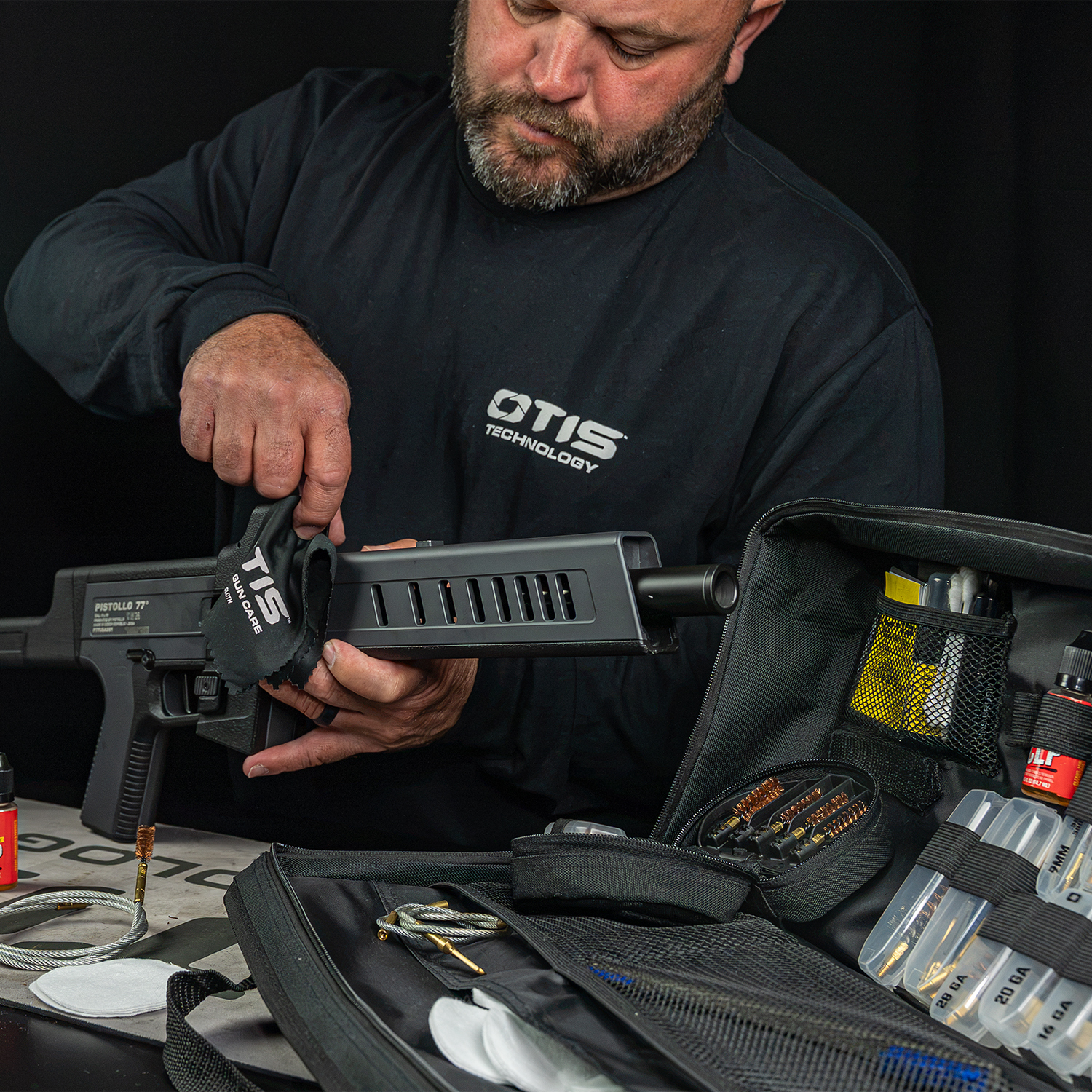
Don't Forget the Optic Lenses
Optics deserve their own cleaning routine. Dust, fingerprints, oils and other debris can accumulate on lenses over time, particularly on firearms that are stored in cases or safes.
Use products specifically designed for optical lenses rather than household glass cleaners or abrasive materials.
The Otis Elite Universal Gun Cleaning Kit includes lens tissue, lens spray, a lens brush and lens cloth in addition to its firearm cleaning components, making it a convenient option for maintaining both the firearm and its optic.
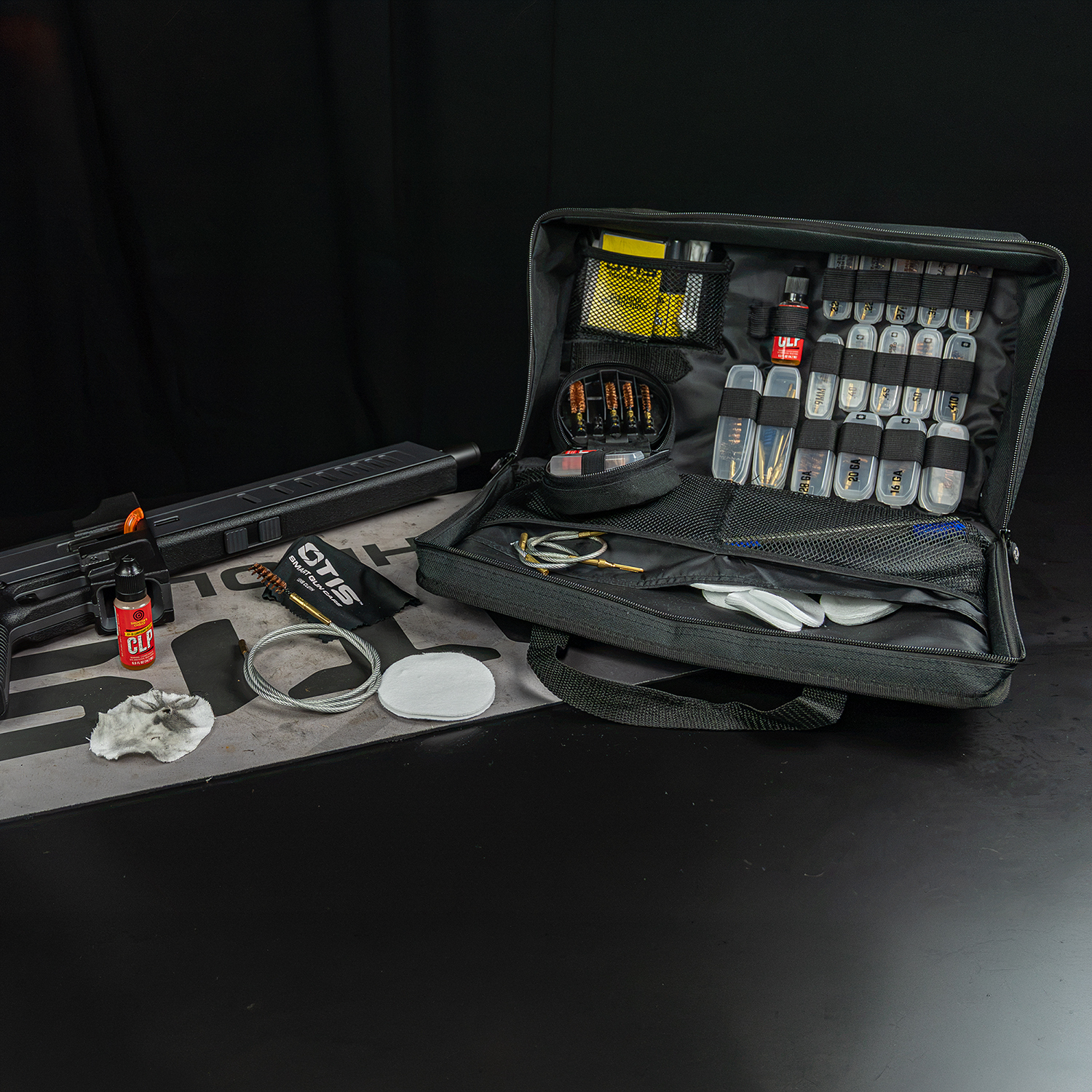
Otis Elite Universal Gun Cleaning Kit
Take a Look at Firearms in Long-Term Storage
The twice-a-year battery change is also a good reminder to open the gun safe and inspect firearms that haven't been used recently.
Even firearms stored in a controlled environment can develop surface corrosion if moisture, humidity or condensation finds its way into the storage area.
Look closely at:
-
The barrel and exterior metal surfaces
-
Screws and other small metal components
-
Magazine bodies
-
Around the muzzle
-
Under or around the optic and mount
-
Areas where metal contacts other materials
-
Hard-to-see areas around the action
You're looking for anything unusual, including discoloration, oxidation, surface rust or changes to the protective finish.
Don't just inspect the firearm — inspect the storage environment, too.
Check your safe or storage area for excessive humidity and make sure any moisture-control products are still functioning as intended.
Give Your Firearms a Maintenance Check
If a firearm has been sitting untouched for months, this is an excellent time to give it some attention.
A firearm doesn't necessarily need an extensive teardown every time you inspect it. A basic cleaning and lubrication can go a long way toward removing accumulated fouling and maintaining the firearm's condition.
Before beginning any firearm maintenance:
Make sure the firearm is unloaded, remove all ammunition from the work area and follow the firearm manufacturer's instructions for safe handling and disassembly.
Once the firearm is confirmed clear, Otis recommends the Breech-to-Muzzle® 3-Step Cleaning Process.
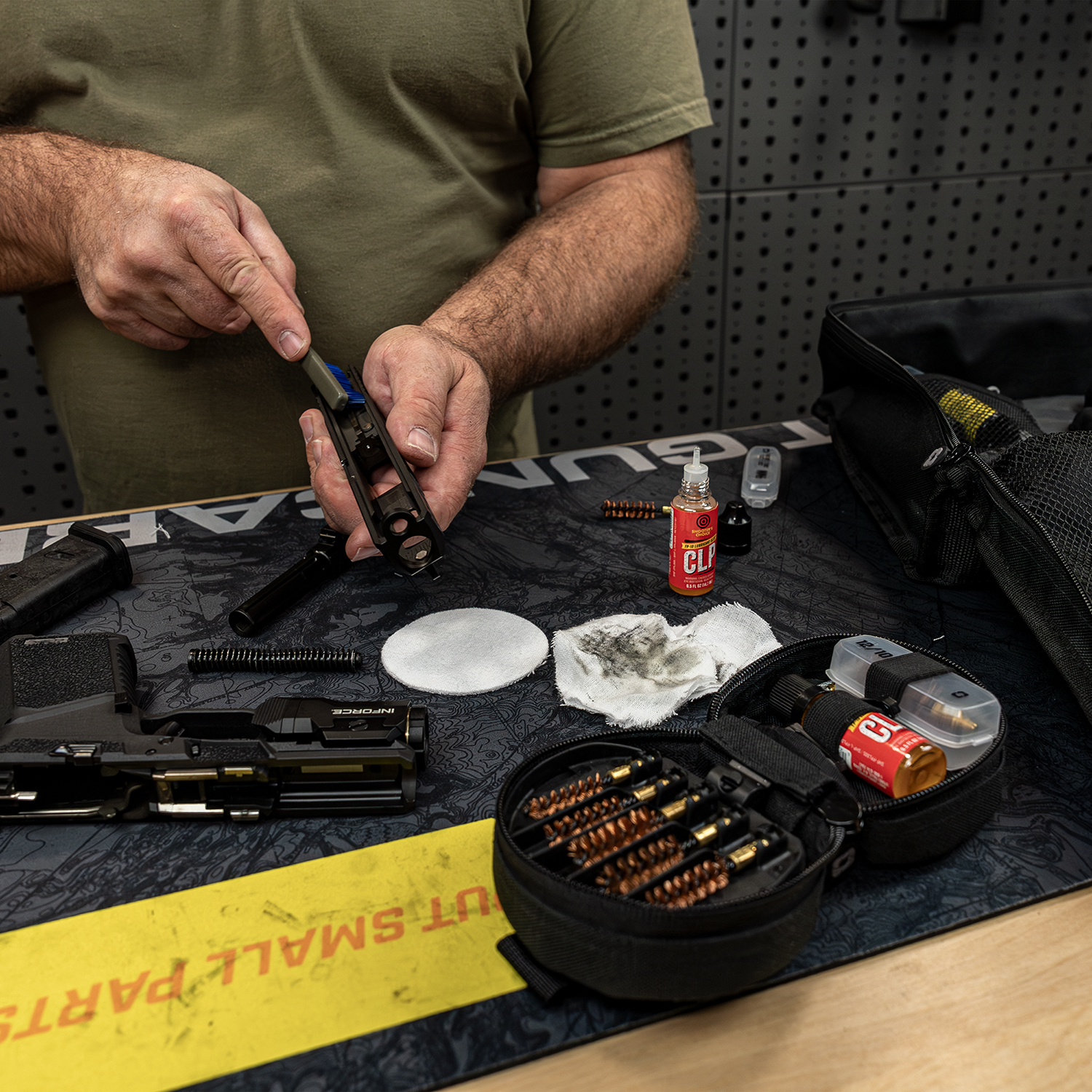
The Otis 3-Step Cleaning Process
The basic process is simple:
1. Wet Patch
2. Bore Brush
3. Dry Patch
Step 1: Wet Patch
Attach the appropriate slotted tip and patch to an Otis Memory-Flex® cable.
Apply the appropriate gun-cleaning solvent or CLP to the patch, then pull the patch through the bore from Breech-to-Muzzle®.
Cleaning in this direction follows the path of the projectile and helps pull fouling out of the firearm rather than pushing it back toward the action.
Step 2: Bore Brush
Replace the slotted tip with the appropriate-size bore brush.
Pull the brush through the bore from breech to muzzle to loosen carbon, copper, lead and other fouling.
Be sure to use the correct brush for the firearm's caliber or gauge.
Step 3: Dry Patch
Replace the bore brush with a clean patch and pull it through the bore from breech to muzzle.
Inspect the patch and repeat the process as necessary until the bore is clean.
Otis summarizes the process as Wet Patch → Brush → Dry Patch, with the three steps repeated as needed.
Don't Stop at the Bore
A twice-a-year inspection is also a good opportunity to clean the other areas of the firearm where dirt, carbon and debris can accumulate.
Depending on the firearm, pay attention to:
-
Chamber and locking areas
-
Bolt or slide
-
Action
-
Trigger-area exterior surfaces
-
Magazine well
-
Feed ramp
-
Gas system components where applicable
-
Exterior metal surfaces
Otis kits include nylon and all-purpose brushes, picks, scrapers and other specialized tools designed to help reach these areas.
After cleaning, apply an appropriate lubricant according to the firearm manufacturer's recommendations. In general, more lubricant isn't necessarily better. Use the appropriate product and amount for the firearm and its intended use.
Make It a Twice-a-Year Habit
The real value of a twice-a-year reminder isn't simply changing a few batteries.
It's creating a habit of checking the equipment that you depend on before you need it.
When the smoke detector batteries get changed, use that moment to spend another 15–30 minutes checking:
Home Safety
-
Smoke detector batteries
-
Carbon monoxide detector batteries
-
Emergency lighting
Firearm Equipment
-
Firearm-mounted lights
-
Flashlights
-
Red dots and other optics
-
Optic batteries
-
Optic mounts
Firearms
-
Signs of rust or corrosion
-
Bore condition
-
Exterior metal surfaces
-
Chamber and action
-
Lubrication
-
Storage conditions
Gear
-
Range bags
-
Hunting equipment
-
Emergency kits
-
Spare batteries
-
Cleaning supplies
A Few Minutes Now Can Make a Difference Later
We all have equipment that spends most of its time sitting quietly in storage.
That's exactly why it can be easy to overlook.
The smoke detector battery reminder provides a convenient twice-a-year trigger to stop, look around and make sure the equipment you rely on is ready to work.
Change the batteries. Test the alarms. Check the flashlights. Inspect your optics. Open the gun safe. Look for corrosion. Clean and lubricate your firearms.
Then close the safe knowing you've done more than check a box on the calendar — you've taken a few simple steps to keep the equipment you depend on ready when you need it.